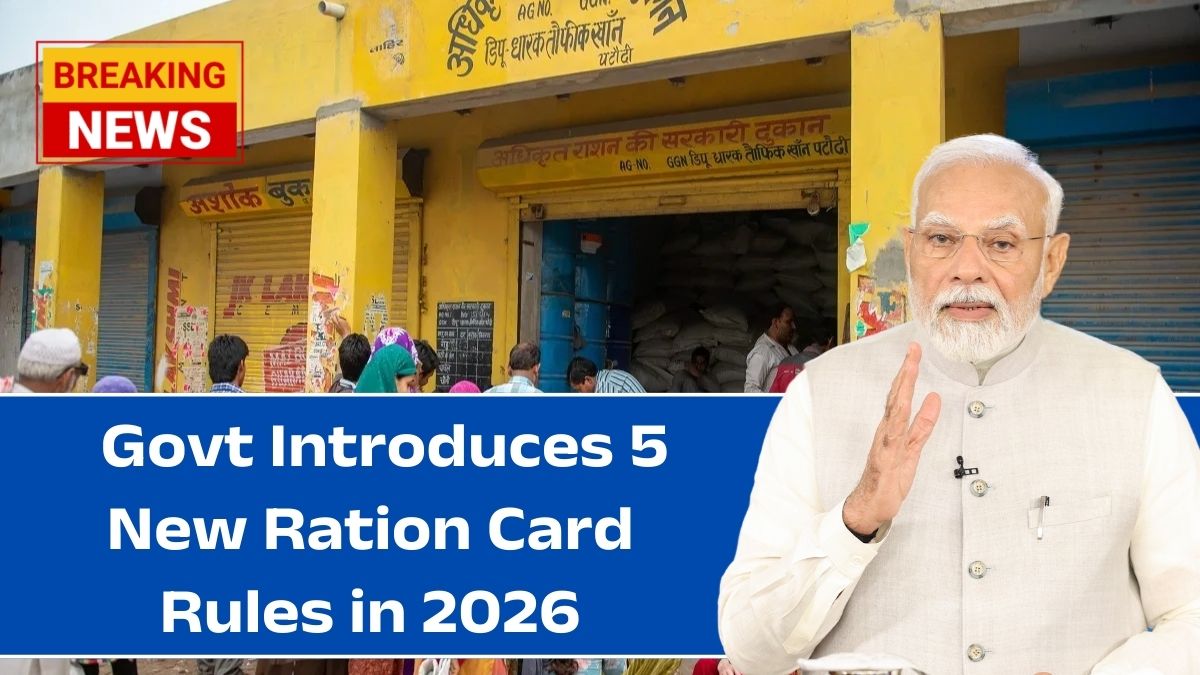
Ration Card New Rules 2026 : In 2026, the Government of India introduced several important updates to the ration card system. These changes are meant to make the public distribution system more transparent and efficient. Millions of families across the country rely on ration cards to receive subsidized or free food grains every month. However, issues like fake ration cards and duplicate beneficiaries had become a serious concern. To address these problems and ensure that benefits reach only the right people, the government has implemented five new rules that every ration card holder should understand.
Key Changes in Ration Card Rules
One of the biggest changes is that e-KYC has now become mandatory for all ration card holders. Beneficiaries must link their ration card with their Aadhaar card and complete biometric verification. This step helps the system confirm the identity of the person receiving the ration. The government has also strengthened the One Nation One Ration Card scheme, which allows people to collect their ration from any fair price shop across India. In addition, digital ration cards are being introduced so that beneficiaries can view their ration details through a mobile app or official government portal.
Benefits of the Ration Card System in 2026
The free ration scheme continues in 2026, which is a big relief for many low-income families. Under this program, eligible households receive essential food grains like wheat and rice every month at no cost. For example, a family of four can receive around 20 kilograms of food grains, which significantly reduces monthly food expenses. The new digital system also allows beneficiaries to track how much ration they have received and when their next distribution is due. This transparency helps reduce corruption and ensures that the support reaches the families who truly need it.

Eligibility Criteria for Ration Card Holders
To qualify for ration card benefits, families must meet certain eligibility requirements set by the government. Generally, the total family income must fall within the prescribed limit defined by the state government. Linking the ration card with Aadhaar is now compulsory, and the e-KYC process must be completed. Priority is often given to vulnerable groups such as Scheduled Castes, Scheduled Tribes, widowed women, persons with disabilities, and homeless individuals. Another important condition is that the family should not have a member who is a government employee or an income-tax payer.
Documents Required for Ration Card Verification
To complete the ration card verification or apply for a new ration card, certain documents are required. The Aadhaar card of all family members is the most important document because it is used for identity verification. Applicants also need to provide a residence proof and an income certificate to confirm their eligibility. A passport-size photograph is required for official records, and a mobile number linked with Aadhaar is necessary for OTP verification during the e-KYC process.
Digital and Biometric System Explained
One of the most notable features of the updated system is the combination of digital records and biometric authentication. Earlier, ration distribution relied heavily on paperwork, which sometimes led to misuse or fake entries. With biometric verification, beneficiaries must authenticate their identity using fingerprints or other biometric methods before receiving ration. This ensures that only the registered beneficiary can collect the ration. The digital database also helps authorities monitor distribution more accurately and prevents duplicate entries in the system.

Objective Behind the New Rules
The main goal of these new rules is to make sure that government food subsidies reach only genuine beneficiaries. In the past, there were cases where fake ration cards were created or ration was collected in the name of deceased individuals. By introducing mandatory e-KYC, biometric verification, and digital tracking, the government aims to eliminate such issues. The updated system is designed to improve accountability, strengthen transparency, and expand support to new eligible families who genuinely need assistance.
Disclaimer
This article is intended for general informational purposes only. The rules and procedures related to ration cards may vary slightly depending on state government policies and official notifications. Readers are advised to verify details through their respective State Food and Civil Supplies Department or official government portals before taking any action. The information presented here is based on publicly available updates and should not be considered as legal or official government guidance.